Dr. Arun S. Nair

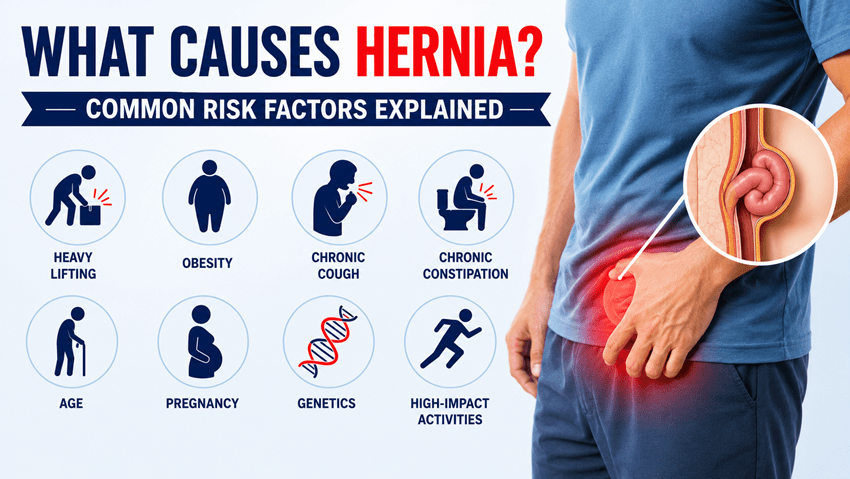
What Causes Hernia? Common Risk Factors Explained

Can a simple cough or lifting a heavy object increase your risk of developing a hernia? Surprisingly, many everyday activities and health conditions can contribute to hernia development without people realizing it. While hernias are common, many individuals are unaware of the factors that can weaken the abdominal wall and increase their chances of developing one.

A hernia occurs when an internal organ or tissue pushes through a weak spot in the surrounding muscle or connective tissue. Some people are born with weaker abdominal tissues, while others develop hernias over time due to factors such as heavy lifting, obesity, chronic coughing, constipation, pregnancy, or previous surgeries. These conditions can increase pressure within the abdomen and gradually weaken the muscles, leading to hernia formation.

Understanding the causes of hernia is important because the condition often develops slowly and may not cause noticeable symptoms in its early stages. By learning about the common hernia risk factors, you can take preventive measures and reduce your chances of developing complications.

If you are experiencing symptoms of a hernia, consulting an experienced Hernia Surgeon in Thrissur such as Dr. Arun S. Nair, who has over 16 years of experience in advanced hernia treatment, can help you receive timely diagnosis and appropriate care.

A hernia is a condition in which an internal organ or fatty tissue pushes through a weakened area of muscle or connective tissue. This abdominal tissue protrusion most commonly occurs in the abdomen or groin region, resulting in a visible bulge or swelling.

Hernias can develop gradually over time or appear suddenly after activities that put strain on the abdominal muscles. While some hernias may not cause immediate symptoms, others can lead to pain, discomfort, and complications if left untreated, making early diagnosis and treatment important.

The causes of hernia generally fall into two categories: muscle weakness and excessive strain.

Some people are born with naturally weak abdominal tissues, while others develop weakness later in life due to aging, surgery, or lifestyle factors.

Common causes of hernia include:

  1. Congenital Weakness in the Abdominal Wall: Some people are born with naturally weak abdominal muscles, making them more prone to developing a hernia.
  2. Age-Related Muscle Weakening: As muscles lose strength with age, the abdominal wall becomes more vulnerable to hernia formation.
  3. Previous Abdominal Surgeries: Surgical incisions can weaken the abdominal wall and increase the risk of an incisional hernia.
  4. Repeated Physical Strain: Frequent heavy lifting or strenuous activities can put excessive stress on the abdominal muscles.
  5. Excessive Abdominal Pressure: Conditions such as obesity, pregnancy, and constipation can increase pressure inside the abdomen and contribute to hernia development.
  6. Chronic Health Conditions That Cause Coughing or Straining: Persistent coughing or repeated straining can gradually weaken the abdominal wall over time.
  7. Family History and Genetic Factors: Individuals with a family history of hernias or inherited connective tissue disorders may have a higher risk of developing a hernia due to naturally weaker tissues.

When these factors are present together, the risk of hernia formation increases considerably.

Understanding the risk factors for hernia can help individuals take preventive measures before complications develop.
  • Heavy Lifting : Repeated lifting of heavy weights can place significant stress on the abdominal wall. Improper lifting techniques further increase the risk of developing a hernia.
  • Chronic Coughing : Persistent coughing caused by smoking, asthma, or lung disease repeatedly increases pressure inside the abdomen, contributing to hernia formation.
  • Chronic Constipation : Frequent straining during bowel movements creates excessive pressure on abdominal muscles and can gradually lead to a hernia.
  • Obesity : Excess body weight places continuous stress on the abdominal wall, making obesity one of the major hernia risk factors.
  • Pregnancy : The growing uterus increases abdominal pressure and stretches the abdominal muscles, increasing the likelihood of certain hernias.
  • Aging : As people age, muscles and connective tissues naturally lose strength and elasticity, increasing susceptibility to hernias.
  • Previous Surgery : Incisions made during abdominal surgery can weaken surrounding tissues and may result in an incisional hernia.
  • Smoking : Smoking affects tissue health and healing while also increasing the likelihood of chronic coughing.
  • Family History : Some individuals inherit weaker connective tissues, making them more vulnerable to hernia development.

Although anyone can develop a hernia, certain groups face a higher risk.

These include:

  • Men: More likely to develop inguinal hernias.
  • Older Adults: Aging weakens muscles and connective tissues.
  • Heavy Lifters: Frequent lifting increases abdominal strain.
  • People With Obesity: Excess weight puts pressure on the abdominal wall.
  • Pregnant Women: Pregnancy increases pressure inside the abdomen.
  • Smokers: Smoking weakens tissues and often causes chronic coughing.

Being aware of these risk factors allows for earlier intervention and prevention.

A hernia may start with mild symptoms, but delaying treatment can increase the risk of complications. It is important to consult a hernia specialist if you notice any unusual symptoms that persist or worsen over time.

You should seek medical attention if you experience:

  • A new or growing bulge in the abdomen or groin
  • Persistent abdominal or groin pain
  • Pain that worsens during physical activity, coughing, or lifting
  • Difficulty performing daily activities due to discomfort
  • Nausea or vomiting associated with a hernia

Early hernia diagnosis allows treatment before serious complications occur.

Hernias are common but should never be ignored. Understanding the causes of hernia and recognising important risk factors for hernia can help you take preventive steps before the condition worsens. Factors such as heavy lifting, obesity, chronic coughing, constipation, pregnancy, and aging all contribute to increased intra-abdominal pressure and weakened abdominal muscles.

If you notice symptoms such as a bulge, discomfort, or persistent pain, seeking medical advice early can help prevent serious complications. Timely diagnosis and appropriate treatment can ensure a safer recovery and better quality of life.

According to Dr. Arun S. Nair, a hernia usually develops when weakened abdominal muscles are combined with increased pressure inside the abdomen. Common causes include heavy lifting, obesity, chronic coughing, constipation, pregnancy, and previous abdominal surgeries.

The most common risk factors for hernia include aging, obesity, heavy lifting, chronic cough, chronic constipation, smoking, pregnancy, and a family history of hernias. These factors can weaken the abdominal wall or increase pressure within the abdomen.


Yes, frequent heavy lifting or lifting with improper technique can increase abdominal pressure and contribute to hernia development. Dr. Arun S. Nair advises using proper lifting techniques, especially for individuals who perform physically demanding work.

While not all hernias can be prevented, maintaining a healthy weight, avoiding excessive strain, treating chronic cough and constipation, and staying physically active can significantly reduce the risk.

Men, older adults, individuals with obesity, smokers, pregnant women, and those who have undergone abdominal surgery are at a higher risk of developing a hernia.

No, hernias typically do not heal without treatment. In many cases, surgical repair is the most effective way to prevent complications and provide long-term relief.