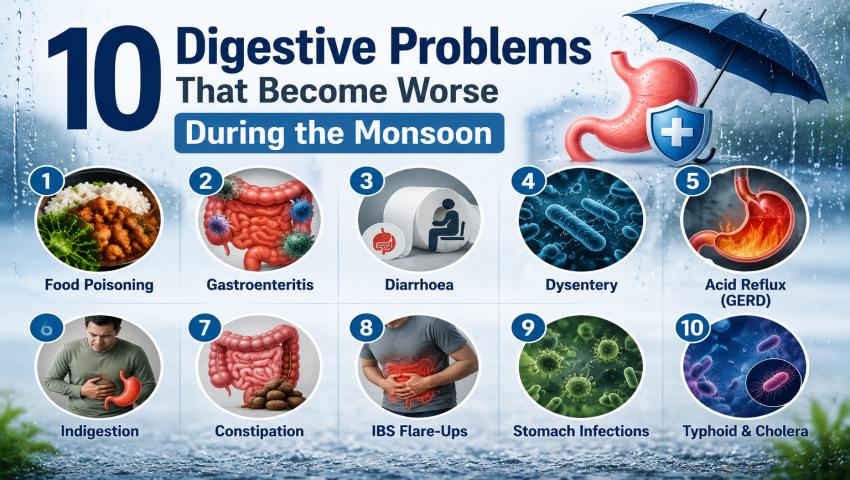
The arrival of the monsoon brings welcome relief from the summer heat, but it also brings an increased risk of digestive illnesses. Have you ever experienced an upset stomach, acidity, diarrhoea, or food poisoning after enjoying roadside snacks or drinking contaminated water during the rainy season? If yes, you’re not alone. The combination of high humidity, contaminated food and water, and rapid growth of harmful microorganisms makes digestive problems during the monsoon much more common than at any other time of the year.
According to the World Health Organisation (WHO), around 600 million people worldwide fall ill every year after consuming contaminated food, leading to nearly 420,000 deaths. During the monsoon, the risk of foodborne and waterborne diseases increases further because high humidity and contaminated water create ideal conditions for harmful microorganisms to thrive.
Many people ignore mild stomach discomfort, assuming it will resolve on its own. However, some monsoon digestive problems can quickly worsen and lead to dehydration, severe infections, or complications if left untreated. Knowing the early symptoms and taking preventive measures can help you avoid unnecessary health issues and enjoy the season safely.
16+ Years of Experience
10000+ Surgeries Completed
15000+ Happy Patients
99% Success Ratio
With over 16 years of experience, Dr Arun S. Nair is a trusted Best GI Surgeon in Thrissur, providing expert diagnosis and treatment for a wide range of digestive disorders. He consults at Elixir Clinic,offering advanced care tailored to each patient’s needs.
The monsoon season can significantly affect your digestive system due to increased exposure to harmful microorganisms, contaminated food, and poor hygiene. Here are 10 common digestive problems that tend to worsen during the rainy season, along with what you should know about them.
Food poisoning is one of the most common digestive problems during the monsoon. Warm and humid weather allows bacteria such as Salmonella, E. coli, and Staphylococcus to multiply rapidly in food, especially when it is not stored or cooked properly.
Common symptoms include:
Nausea and vomiting
Diarrhoea
Stomach cramps
Fever
Weakness and dehydration
How to prevent it?
Eat freshly prepared meals.
Avoid stale or uncovered food.
Wash fruits and vegetables thoroughly.
Drink only clean, filtered, or boiled water.
Gastroenteritis is an inflammation of the stomach and intestines caused by viruses, bacteria, or parasites. It is one of the leading monsoon digestive problems, especially among children and older adults.
Common symptoms include:
Frequent loose stools
Vomiting
Abdominal pain
Fever
Loss of appetite
How to prevent it?
Wash your hands before eating.
Avoid sharing food and drinks.
Maintain good personal hygiene.
Stay hydrated with safe drinking water.
Diarrhoea is a frequent complaint during the rainy season and is often caused by contaminated food or water. If not treated promptly, it can lead to dehydration, particularly in children and elderly individuals.
Common symptoms include:
Loose, watery stools
Abdominal cramps
Nausea
Weakness
Excessive thirst
How to prevent it?
Drink plenty of fluids.
Avoid street food.
Follow proper food hygiene.
Seek medical advice if symptoms last more than two days.
Unlike ordinary diarrhoea, dysentery causes inflammation of the intestines and is usually accompanied by blood or mucus in the stool. It commonly develops due to bacterial or parasitic infections during the monsoon.
Common symptoms include:
Bloody diarrhoea
Severe abdominal pain
Fever
Painful bowel movements
How to prevent it?
Drink clean water.
Wash hands regularly.
Eat hygienically prepared food.
Avoid consuming food from unhygienic places.
Many people experience worsening acid reflux or GERD during the rainy season because of irregular eating habits and increased intake of spicy, oily, or fried foods.
Common symptoms include:
Burning sensation in the chest
Sour taste in the mouth
Bloating
Difficulty swallowing in severe cases
How to prevent it?
Eat smaller meals.
Avoid lying down immediately after eating.
Limit spicy, fried, and caffeinated foods.
Maintain a healthy body weight.
Indigestion is another common stomach problem during the monsoon. Eating heavy meals, consuming contaminated food, or overeating can slow digestion and cause discomfort.
Common symptoms include:
Feeling overly full
Bloating
Burping
Upper abdominal discomfort
Mild nausea
How to prevent it?
Eat slowly.
Avoid overeating.
Prefer home-cooked meals.
Include fibre-rich foods in your diet.
Although people often associate the monsoon with diarrhoea, constipation is equally common. Reduced physical activity, inadequate water intake, and poor dietary habits during rainy days can slow bowel movements.
Common symptoms include:
Hard stools
Difficulty passing stools
Infrequent bowel movements
Abdominal discomfort
How to prevent it?
Stay well hydrated.
Eat plenty of fruits and vegetables.
Include whole grains in your meals.
Exercise regularly, even indoors.
People living with Irritable Bowel Syndrome often notice that their symptoms become worse during the monsoon. Changes in diet, seasonal infections, and stress can trigger flare-ups.
Common symptoms include:
Abdominal pain
Bloating
Constipation or diarrhoea
Excessive gas
How to prevent it?
Avoid trigger foods.
Eat meals on time.
Manage stress.
Stay hydrated throughout the day.
The risk of stomach infections and other gastrointestinal infections increases during the rainy season because harmful microorganisms spread more easily through contaminated food and water.
Common symptoms include:
Stomach pain
Vomiting
Diarrhoea
Fever
Fatigue
How to prevent it?
Consume freshly cooked food.
Drink safe drinking water.
Maintain good kitchen hygiene.
Avoid raw or undercooked food.
Typhoid and cholera are serious waterborne diseases that become more common during the monsoon due to poor sanitation and contaminated water supplies. Both conditions require immediate medical attention.
Common symptoms include:
High fever
Persistent diarrhoea
Vomiting
Severe dehydration
Weakness
How to prevent it?
Drink boiled or filtered water.
Avoid ice from unknown sources.
Wash hands before meals.
Follow proper food hygiene practices.
Most digestive diseases during the monsoon are preventable with simple precautions. Choosing freshly cooked food, maintaining good hygiene, drinking safe water, and avoiding unhygienic eating habits can go a long way in protecting your gut health during the monsoon. However, if symptoms become severe or persist for more than a couple of days, it’s important to seek medical care instead of relying solely on home remedies.
While many digestive problems improve with rest, proper hydration, and a healthy diet, some symptoms should never be ignored. Delaying treatment can allow an underlying digestive condition or infection to worsen, leading to complications that may require advanced medical care.
You should consult a Gastroenterologist in Thrissur if you experience any of the following:
Diarrhoea lasting for more than two days
Persistent vomiting or inability to keep fluids down
Severe or recurring abdominal pain
Blood in the stool or black, tarry stools
High fever along with digestive symptoms
Signs of dehydration, such as dizziness, dry mouth, or reduced urination
Frequent acid reflux or heartburn that does not improve
Ongoing constipation or indigestion despite lifestyle changes
Unexplained weight loss or loss of appetite
Recurrent stomach infections or gastrointestinal infections
Early diagnosis not only helps relieve symptoms faster but also prevents minor digestive issues from developing into more serious conditions. A gastroenterologist can identify the root cause through a detailed evaluation and recommend the most effective treatment based on your condition.
Dr. Arun S. Nair
Advanced Laparoscopic,
Robotic, GI Cancer,
HPB & Bariatric Surgeon
If you’re looking for expert care for digestive disorders, Dr Arun S. Nair offers comprehensive diagnosis and treatment for a wide range of gastrointestinal conditions. With over 16 years of experience, he is recognised as a Best GI Surgeon in Thrissur and a trusted Gastroenterologist in Thrissur, providing personalised care with a patient-first approach.
Patients choose Dr Arun S. Nair because of:
Extensive Experience
Comprehensive Digestive Care
Advanced Surgical Expertise
Personalised Treatment Plans
Trusted Healthcare Facilities
Whether you’re dealing with seasonal digestive discomfort or a long-standing gastrointestinal condition, seeking timely medical advice can help prevent complications and improve your quality of life.
The monsoon season may bring pleasant weather, but it also increases the risk of digestive problems during the monsoon due to contaminated food, unsafe drinking water, and poor hygiene. Conditions such as food poisoning, gastroenteritis, acid reflux, indigestion, constipation, and other digestive disorders during the monsoon can often be prevented by following good hygiene practices, eating freshly prepared food, and drinking safe water.
However, if digestive symptoms become severe, recur frequently, or do not improve within a few days, don’t ignore them. Early medical evaluation can help identify the underlying cause and prevent serious complications.
If you’re looking for expert digestive care, Dr Arun S. Nair, a leading GI Surgeon in Thrissur and Gastroenterologist in Thrissur, provides comprehensive evaluation and advanced treatment for a wide range of digestive conditions. With the right guidance and timely care, you can protect your digestive health and enjoy a healthier, worry-free monsoon.