Do you feel like food gets “stuck” in your chest every time you swallow? Or do you often bring up undigested food hours after a meal, and everyone around you keeps saying “it’s just acidity”? If this sounds familiar, you are not alone — and it may not be simple acidity at all.
This is exactly how most patients with Achalasia Cardia describe their first few months of struggle. It is a rare but manageable condition, and the good news is that with the right diagnosis and treatment, most people go back to eating normally and living without fear of every meal. Dr. Arun S. Nair, a gastroenterologist in Thrissur with 16 years of experience treating swallowing and digestive disorders, sees this pattern often in his clinic — patients who spent years being treated for “gas” or “GERD” before finally getting the right diagnosis and the right Achalasia Cardia treatment in Thrissur.
In this blog, we’ll walk you through what Achalasia Cardia really is, how it’s diagnosed, and what your treatment options look like, explained in plain, simple language.
16+ Years of Experience
10000+ Surgeries Completed
15000+ Happy Patients
99% Success Ratio
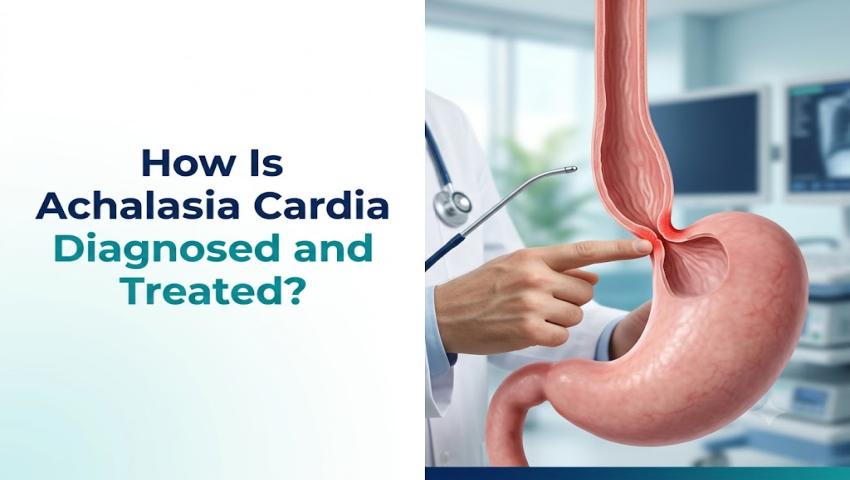
Achalasia is a disorder of the esophagus, the food pipe connecting mouth to stomach, where the lower esophageal sphincter (LES), or “cardia,” fails to relax and the esophagus loses its normal squeezing motion. This causes food and liquids to pile up instead of moving down, leading to difficulty swallowing, regurgitation, chest discomfort, and weight loss — symptoms often mistaken for acid reflux or gastritis for years before the correct diagnosis is made.
The exact cause of achalasia isn’t fully understood, but a few things are believed to play a role:
Nerve damage in the esophagus, which affects the signals telling the LES to relax
Autoimmune reactions, where the body’s own immune system may attack the nerve cells of the esophagus
Viral triggers, which some researchers believe may set off this autoimmune response
Genetic factors, though this is rare and not the norm
Achalasia can affect anyone, though it’s usually diagnosed in adults between 25 and 60 years of age, affecting men and women fairly equally.
Since the symptoms overlap so much with GERD, hiatal hernia, and even esophageal cancer, getting an accurate diagnosis is the most important first step. A gastroenterologist in Thrissur will typically use a combination of the following tests to confirm the condition:
Barium Swallow (Esophagram): You drink a barium solution while X-rays are taken. In achalasia, the esophagus often shows a narrowed lower end that looks like a “bird’s beak,” along with a dilated esophagus above it.
Esophageal Manometry: This is considered the gold standard test for diagnosing achalasia. A thin tube is passed through the nose into the esophagus to measure muscle pressure and coordination during swallowing. High-resolution manometry (HRM) can even classify achalasia into subtypes (Type I, II, or III as per the Chicago Classification), which helps guide treatment decisions.
Upper Endoscopy (EGD): An endoscope is used to look directly inside the esophagus and stomach. This step is essential to rule out other causes of blockage, especially tumors, since the symptoms can look similar.
Timed Barium Esophagram: This variation of the barium swallow test measures how much barium remains in the esophagus after a set time, giving doctors a clear picture of how well (or poorly) the esophagus is emptying.
One important step doctors don’t skip is ruling out “pseudoachalasia” — a condition where a tumor near the gastroesophageal junction mimics the symptoms and test results of true achalasia. This is why an endoscopy (and sometimes a CT scan) is done alongside manometry, especially in patients over 50 or those with rapid, unexplained weight loss. Catching this early can make a significant difference in treatment planning.
There is currently no cure that restores normal esophageal muscle function, but treatment focuses on relieving the blockage at the LES so that food can pass through more easily. The right option depends on the patient’s age, achalasia subtype, and overall health. Most centres offering Achalasia Cardia treatment in Thrissur will recommend one of the following approaches.
Pneumatic Dilation: A balloon is passed into the esophagus and inflated to stretch and loosen the tight LES muscle. It’s a non-surgical, endoscopic procedure with good short-to-medium term results, though it may need to be repeated over time.
Botulinum Toxin (Botox) Injection: Botox is injected directly into the LES to relax the muscle temporarily. This is usually recommended for older patients or those who aren’t fit for surgery, as the effects tend to wear off after several months.
Medications: Drugs like nitrates or calcium channel blockers can help relax the LES, but they offer limited and short-term relief. These are generally used as a temporary measure rather than a long-term solution.
Heller Myotomy: This is a surgical procedure where the tight muscle fibers of the LES are cut to allow food to pass more freely. It’s usually done laparoscopically (through small incisions) and is often combined with a fundoplication — a technique that helps prevent acid reflux after the muscle is cut. A skilled laparoscopic surgeon in Thrissur can perform this procedure with minimal downtime and a fairly quick return to normal eating.
POEM (Peroral Endoscopic Myotomy): POEM is a newer, minimally invasive procedure done entirely through the mouth using an endoscope, with no external cuts at all. It achieves similar results to Heller myotomy for many patients, with a quicker recovery time.
There’s no one-size-fits-all answer here. Younger patients with Type III achalasia may respond better to POEM or Heller myotomy, while older patients with other health conditions are often better suited to Botox or pneumatic dilation. This is why an accurate diagnosis, including knowing your exact achalasia subtype, matters so much before deciding on treatment.
If you’re looking into Achalasia Cardia treatment in Thrissur, it helps to consult a specialist who manages both the gastroenterology and surgical side of the condition. Dr. Arun S. Nair, a gastroenterologist in Thrissur and laparoscopic surgeon in Thrissur practicing at Elixir Clinic, guides patients through this exact process — from diagnosis to choosing the right treatment.
Most people with achalasia go on to live a completely normal life after treatment, especially when the condition is caught early and managed properly. That said, long-term follow-up matters:
Regular check-ups help track how well the esophagus is emptying over time
Some patients may need repeat dilation or a second procedure years later
There is a small increased long-term risk of esophageal cancer in achalasia patients, which is why periodic endoscopic monitoring is usually recommended
Simple dietary adjustments — eating slowly, chewing thoroughly, and avoiding very dry or doughy foods — can make daily life a lot more comfortable
Achalasia Cardia can feel confusing, especially when it’s been misdiagnosed as reflux for years. But once correctly identified through tests like esophageal manometry, barium swallow, and endoscopy, it’s a manageable condition with several effective treatment paths — from Botox and pneumatic dilation to Heller myotomy and POEM.
If you’ve been struggling with swallowing difficulties, regurgitation, or unexplained weight loss, don’t wait it out. An experienced gastroenterologist in Thrissur and laparoscopic surgeon in Thrissur can help you get a clear diagnosis and the right Achalasia Cardia treatment in Thrissur, early on.