
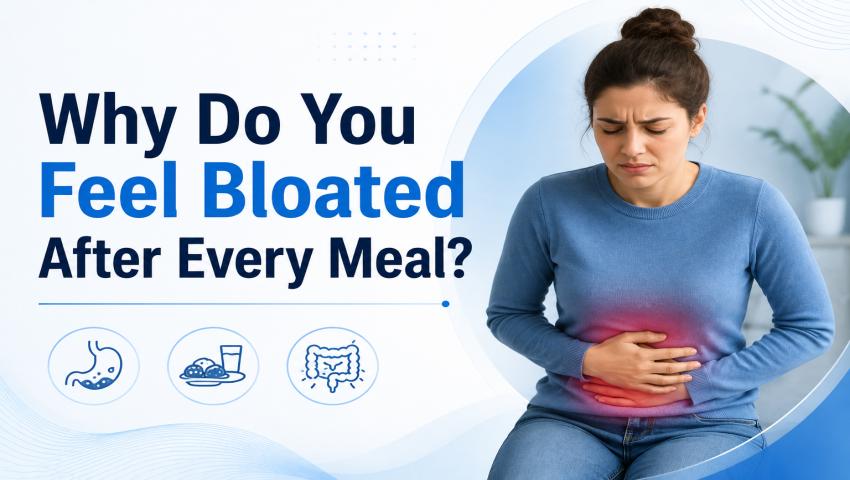
Have you ever finished a meal only to feel your stomach becoming unusually full, tight, or swollen? While occasional bloating after eating may be caused by overeating or eating too fast, frequent bloating could be a sign of an underlying digestive condition such as Irritable Bowel Syndrome (IBS), making timely IBS treatment in Thrissur important.
Many people ignore persistent stomach bloating after eating, assuming it is a normal part of digestion. However, if you frequently experience bloating in the stomach after eating, along with bloating abdomen, it could be linked to food intolerances, constipation, acid reflux, IBS, or other digestive disorders that may require medical attention.
With over 16 years of experience, Dr. Arun S. Nair has helped patients identify and manage a wide range of digestive conditions. If you experience bloating after most meals, consulting an experienced Gastroenterologist in Thrissur can help identify the underlying cause and guide you towards the right treatment.
Feeling bloated after every meal is not a disease itself—it is a symptom. Bloating occurs when the gastrointestinal tract becomes filled with gas or when digestion slows down, creating a sensation of fullness and pressure in the abdomen.
Many people describe it as:
Occasional bloating is common and usually settles on its own. However, if you repeatedly wonder, “why do I feel bloated after eating?”, especially after almost every meal, it may indicate an underlying digestive problem that needs attention.
Persistent bloating after eating should not be ignored, particularly if it starts affecting your daily routine or is accompanied by pain, constipation, diarrhoea, or unexplained weight loss. While bloating in stomach is often harmless, identifying its cause early can prevent complications and improve your overall quality of life.
There is no single reason why someone feels bloated after every meal. Several factors can contribute to this uncomfortable feeling, ranging from simple eating habits to chronic digestive disorders.
When you eat fast, you swallow more air along with your food. This trapped air can accumulate inside your digestive tract, causing abdominal bloating, burping, and discomfort after meals.
Taking smaller bites and chewing food thoroughly can significantly reduce stomach bloating after eating.
Eating large portions stretches the stomach and slows digestion. Food remains in the stomach for longer, increasing gas production and making you feel excessively full.
People who regularly overeat often experience bloating and gas, even if they are otherwise healthy.
Certain foods naturally produce more gas during digestion. These include:
These foods are healthy but may contribute to excessive gas after eating, especially in people with sensitive digestive systems.
When stool remains in the intestines for too long, gas gets trapped behind it. This often leads to a feeling of fullness, bloating abdomen, and abdominal discomfort.
Treating constipation can often reduce recurring bloating after eating.
Poor digestion slows the movement of food through the digestive tract, leading to indigestion after eating, trapped gas, and stomach discomfort.
People with chronic indigestion may notice they feel bloated even after eating small meals.
The digestive system and the brain are closely connected. Emotional stress can affect how the stomach and intestines function, slowing digestion and increasing gas production.
Many people notice their bloating in stomach becomes worse during stressful periods.
Women may experience temporary bloating before or during their menstrual cycle due to hormonal fluctuations that cause water retention and slower digestion.
Unlike chronic digestive disorders, this type of bloating usually improves within a few days.
An imbalance in the bacteria living inside the intestines can interfere with digestion and increase gas production.
Maintaining good digestive health through a balanced diet, adequate hydration, and regular exercise helps support healthy gut bacteria and reduces recurring bloating after eating.
Certain foods causing bloating can trigger stomach bloating after eating, especially if your digestive system is sensitive. Common culprits include:
If you frequently experience bloating abdomen, keeping a food diary can help identify your trigger foods.
Yes. Food intolerances are a common cause of bloating after eating because the digestive system struggles to break down certain foods.
Some common food intolerances include:
If you notice symptoms after eating specific foods, consult your doctor for proper evaluation and testing.
If lifestyle changes and dietary adjustments do not improve your symptoms, an underlying digestive disorder may be responsible.
IBS is one of the most common causes of persistent bloating after eating. Along with bloating abdomen, people with IBS may experience:
Early diagnosis helps manage symptoms effectively through dietary changes, medication, and stress management. If symptoms continue for several weeks, consulting a specialist for IBS treatment in Thrissur can help identify the best treatment plan.
GERD occurs when stomach acid frequently flows back into the food pipe. While heartburn is the most recognised symptom, many people also experience:
Constipation: When bowel movements become infrequent, stool remains in the colon for longer than normal. This slows digestion and allows gas to accumulate, leading to persistent bloating in stomach and discomfort.
SIBO occurs when excessive bacteria grow in the small intestine. These bacteria ferment food before it is fully digested, causing:
Gastroparesis is a condition in which the stomach empties more slowly than normal. Food remains in the stomach for longer, resulting in:
Gallstones or poor gallbladder function can interfere with fat digestion. People often notice symptoms after eating oily or heavy meals, including:
With over 16 years of experience, Dr. Arun S. Nair, a Digestive Health Specialist in Thrissur and Best GI Surgeon in Thrissur, evaluates persistent digestive symptoms to identify the underlying cause and recommend personalised treatment. Depending on the diagnosis, this may include dietary guidance, medication, bloating treatment in Thrissur, IBS treatment in Thrissur, or, in selected cases, advanced surgical care.
Although bloating after eating is often caused by common digestive issues, persistent symptoms should not be ignored. Consult a doctor if you experience:
In rare cases, persistent bloating abdomen may be linked to serious conditions such as stomach or colon cancer, pancreatic disorders, or liver disease. An early consultation with a Gastroenterologist in Thrissur can help identify the cause and, if needed, guide you towards advanced care, including gastric cancer treatment in Thrissur.
Simple lifestyle changes can help reduce bloating after eating and improve digestion:
If symptoms persist despite these changes, consult a healthcare professional for proper evaluation.
Along with lifestyle changes, several simple home remedies for gas problems and bloating can offer quick relief when discomfort strikes after a meal. These natural remedies for gas and bloating are safe for most people and work well alongside medical advice for occasional symptoms.
While these remedies can provide relief for occasional discomfort, they are not a substitute for medical evaluation. If bloating and gas continue despite trying these natural remedies for gas and bloating, it may indicate an underlying digestive condition that needs professional attention from a Gastroenterologist in Thrissur.
Occasional bloating is common, but if you feel bloated after every meal for more than two to three weeks despite dietary changes, consult a specialist.
See a doctor if you experience:
With over 16 years of experience, Dr. Arun S. Nair, a Surgical Gastroenterologist in Thrissur, provides personalised care as a Digestive Health Specialist for a wide range of digestive disorders. Depending on the underlying cause, treatment may include dietary guidance, medication, IBS treatment in Thrissur, or bloating treatment to help improve long-term digestive health.
Feeling bloated after every meal should not be ignored, especially if it persists despite lifestyle changes. While bloating in the stomach or bloating is often caused by common digestive issues such as food intolerances, IBS, constipation, or acid reflux, persistent symptoms may require medical evaluation.
If your symptoms continue or worsen, consult Dr. Arun S. Nair, a Best GI Surgeon in Thrissur with over 16 years of experience, at Elixir Clinic for an accurate diagnosis and appropriate treatment. Identifying the underlying cause early is the first step towards better digestive health.


1ST FLOOR ZABS FORT building, Civil Lane Road, Poothole P.O, Thrissur, Kerala 680004
Church Post Office Road near Parumala, Thiruvalla, Kerala 689626
+91-9539988886
drarungastrosurgeon@gmail.com
© 2026 Dr Arun Gastro Surgeon All rights reserved | Website Designed by Digital Mogli LLP

