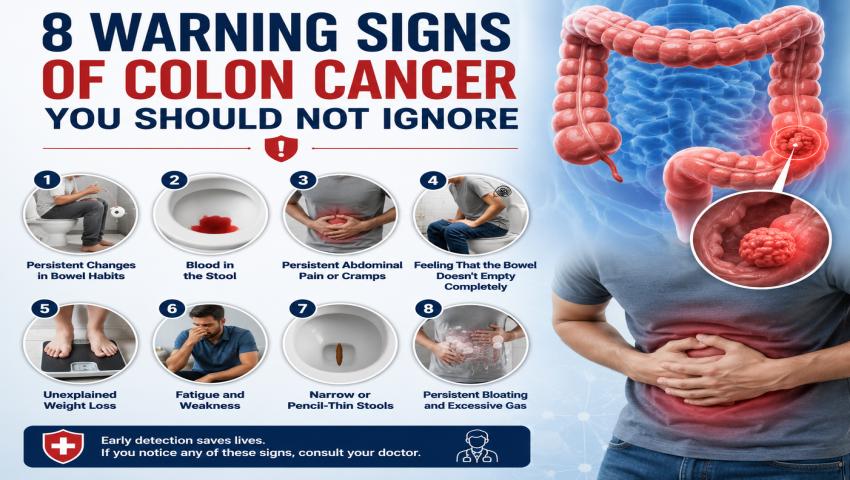
Have you been ignoring changes in your bowel habits, assuming they are caused by piles, indigestion, or something you ate? While these symptoms are often linked to minor digestive problems, they can sometimes be the early signs of colon cancer. Unfortunately, many people overlook these warning signs until the disease has progressed, making treatment more challenging.
If your symptoms persist or you have a family history of colon cancer, seeking expert advice without delay is important. Dr. Arun S. Nair, with 16+ years of experience in gastrointestinal surgery, offers comprehensive evaluation and advanced Colon Cancer Treatment in Thrissur, focusing on early diagnosis and personalised care for every patient.
In this blog, we’ll discuss the warning signs of colon cancer, identify who is at higher risk, explain how the condition is diagnosed, and explore the available treatment options. If you experience persistent digestive symptoms, consulting an experienced Gastroenterologist in Thrissur can help identify the underlying cause and ensure timely medical care.
Although colon cancer can affect anyone, certain factors increase the likelihood of developing the disease.
You may be at a higher risk if you:
Are over the age of 45
Have previously had colon polyps
Are overweight or obese
Smoke or consume excessive alcohol
Lead a physically inactive lifestyle
Have Type 2 diabetes
Have a family history of colon or colorectal cancer
Eat a diet high in processed or red meat and low in fibre
Being aware of these risk factors can help you take preventive measures and discuss appropriate screening with your doctor.
Recognising the warning signs of colon cancer early can help with timely diagnosis and treatment. While these symptoms may also occur due to other digestive conditions, they should not be ignored if they persist for more than two weeks.
A lasting change in your normal bowel habits is one of the earliest signs of colon cancer. If constipation, diarrhoea, or changes in stool frequency continue without an obvious reason, it’s important to seek medical advice.
Watch out for:
Constipation or diarrhoea lasting more than two weeks
Alternating between constipation and diarrhoea
Increased urgency to pass stools
Frequent bowel movements without relief
Blood in the stool is a symptom that should never be ignored. While piles or anal fissures can also cause bleeding, only a proper medical evaluation can determine the exact cause.
You may notice:
Bright red blood after passing stools
Dark or black-coloured stools
Blood mixed with the stool
Repeated episodes of rectal bleeding
Ongoing abdominal pain that does not improve with medication or dietary changes may indicate a problem in the colon. It may be accompanied by bloating or excessive gas.
Common symptoms include:
Frequent stomach cramps
Persistent bloating
Excessive gas
Abdominal discomfort after meals
Some people continue to feel the need to pass stools even after a bowel movement. This sensation can occur if a growth partially blocks the colon.
Warning signs include:
Constant urge to pass stools
Feeling of incomplete bowel emptying
Straining without relief
Symptoms that persist for several days
Losing weight without changes in your diet or physical activity may be a sign that your body is fighting an underlying illness, including colon cancer.
Consult a doctor if you notice:
Sudden weight loss
Reduced appetite
Clothes becoming loose without trying
Weight loss along with digestive symptoms
Persistent tiredness can occur due to slow blood loss from the colon, leading to iron deficiency anaemia.
It may be accompanied by:
Lack of energy
Weakness
Dizziness
Shortness of breath during routine activities
If your stools remain unusually thin for several days, it may indicate that something is narrowing the passage inside the colon.
Pay attention if you notice:
Pencil-thin stools
Narrow stools repeatedly
Stool shape changing with other symptoms
Persistent changes in bowel movements
Occasional bloating is common, but if it becomes frequent or is associated with other digestive symptoms, it should be evaluated.
Symptoms may include:
Frequent bloating
Excessive gas
Feeling full after small meals
Abdominal swelling that doesn’t improve
You should consult a doctor immediately if:
You notice blood in your stool.
Your bowel habits change for more than two weeks.
You experience persistent abdominal pain or bloating.
You lose weight without trying.
You have ongoing fatigue caused by unexplained anaemia.
You have a family history of colon cancer and develop digestive symptoms.
Ignoring these warning signs may delay diagnosis. Early evaluation allows doctors to identify the cause and begin appropriate treatment as soon as possible.
If your doctor suspects colon cancer, several tests may be recommended to confirm the diagnosis.
These include:
Medical history and physical examination to understand your symptoms and risk factors.
Colonoscopy, the most reliable test for examining the inside of the colon and detecting abnormal growths.
Biopsy, where a small tissue sample is collected during colonoscopy for laboratory analysis.
Stool tests to detect hidden blood.
CT scans or MRI scans to determine whether the cancer has spread.
Blood tests, including tests for anaemia and overall health assessment.
An early diagnosis provides more treatment options and significantly improves the chances of successful recovery.
The treatment for colon cancer depends on the stage of the disease, the location of the tumour, and the patient’s overall health. Common treatment options include:
Surgery: Surgery is the main treatment for most cases of colon cancer. It involves removing the cancerous part of the colon and nearby lymph nodes. Minimally invasive laparoscopic or robotic surgery may be recommended for suitable patients.
Chemotherapy: Chemotherapy uses medicines to destroy cancer cells and may be given before or after surgery to improve treatment outcomes.
Targeted Therapy: This treatment targets specific cancer cells while minimising damage to healthy tissues. It is usually recommended for certain advanced cases.
Immunotherapy: Immunotherapy helps the body’s immune system recognise and fight cancer cells. It may be suitable for selected patients based on the type of colon cancer.
If you are looking for Colon Cancer Treatment in Thrissur, consult an experienced gastrointestinal surgeon for an accurate diagnosis and a personalised treatment plan.
Recognising the warning signs of colon cancer and seeking timely Colon Cancer Treatment in Thrissur can make a significant difference in treatment outcomes. Symptoms such as persistent changes in bowel habits, blood in the stool, unexplained weight loss, abdominal pain, or ongoing fatigue should never be ignored, as early diagnosis often leads to more effective treatment.
If you experience any of these symptoms or have a family history of colorectal cancer, don’t delay getting evaluated. Early diagnosis not only improves the chances of successful recovery but also helps prevent complications.
For expert care, consult Dr. Arun S. Nair, who has 16+ years of experience in treating gastrointestinal conditions. An experienced Gastroenterologist in Thrissur can accurately diagnose the cause of your symptoms and recommend the most appropriate treatment based on your condition.